
A gentler spay, through tiny keyhole incisions.
A laparoscopic spay uses a camera and two or three ~1 cm incisions instead of one larger opening. Most pets are more comfortable afterwards and get back to normal faster, with no external stitches to remove.
Our skilled veterinarians offer state-of-the-art laparoscopic surgery for dogs and cats. Whether it’s a routine spay or a more complex procedure, we’re here to make the experience as stress-free as possible for you and your pet.


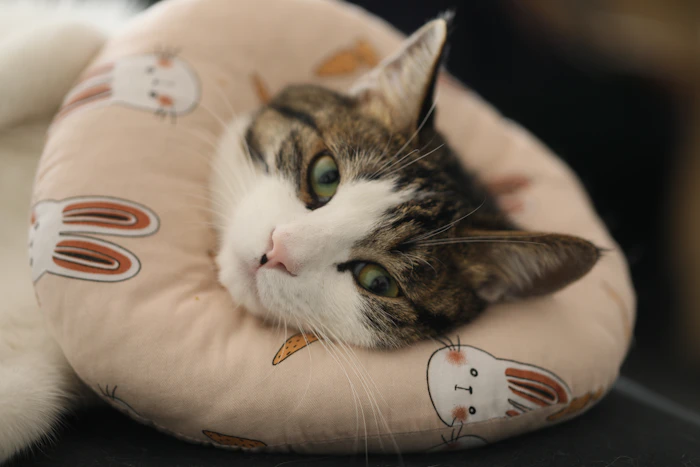
Why it's easier on your pet
Smaller incisions and a magnified view mean less handling of tissue. Studies comparing the two approaches found most pets were more comfortable afterwards and back to normal sooner.
What it means for your pet
Usually less pain
Smaller incisions and less handling of tissue, so fewer pets need extra pain relief in the hours after surgery.
Pain scores were lower at every time point checked (Devitt 2005)
Less stress
A smaller rise in stress hormones after surgery, so pets tend to wake up calmer.
Cortisol at two hours was roughly half that of open spays (Hancock 2005)
Back to normal sooner
Pets tend to stay more active and more like themselves in the days that follow.
Activity dropped 25% after laparoscopy vs 62% after open surgery (Culp 2009)
Fewer wound problems
Less redness, swelling and infection at the incision, and no external stitches to remove.
Mayhew 2012; Moxon 2025
A clearer view
The camera magnifies the view on a screen, helping the surgeon see small vessels and tissue clearly.
Standard rationale for laparoscopy
A safe fallback
If the surgeon ever needs a wider view to keep your pet safe, they can switch to a traditional incision during the same anesthetic.
The studies are encouraging but small, so we describe what is typical, never guarantees. Your pet still needs rest and incision protection afterwards.
A lap spay, step by step
- Step 1
Checks and anesthesia
Pre-operative checks, including a physical exam and bloodwork, then gentle anesthesia. State-of-the-art monitoring tracks temperature, heart rate, oxygen levels, blood pressure, ECG and CO2.
- Step 2
The surgery
Two or three ~1 cm incisions for the camera and instruments. The ovaries are removed with tools that dramatically reduce pain and bleeding compared with a traditional spay, then closed with an intradermal technique, leaving no external stitches to remove or cause discomfort.
- Step 3
Waking up
Your pet is carefully monitored as they wake from anesthesia, with pain management and checks for any complications.
Laparoscopic procedures we offer
We'll tell you whether keyhole surgery suits your pet, and how the cost compares with a traditional procedure.
- Spays
- Abdominal cryptorchid neuters
- Gastropexy (to prevent stomach torsion)
- Biopsy
Questions we're often asked
Is a laparoscopic spay right for my pet?+
Not always. Very small patients, pregnancy, uterine disease, some emergencies, or a need for wider access may call for open surgery. The surgeon makes the final call at the consult.
Why leave the uterus in?+
A laparoscopic spay usually removes only the ovaries (ovariectomy). Pyometra needs ovarian hormones, so removing the ovaries protects against it just as well, and long-term studies show similar rates of incontinence either way.
Does it take longer under anesthesia?+
With an experienced surgeon, surgery time is similar. In one study the laparoscopic spay took about 21 minutes vs 19 for open. Setup takes a little longer.
Why does it cost more?+
Because of the specialized camera, instruments and training. We’ll give you an estimate for both options, and owners tell us the easier recovery is worth it.
Can a gastropexy be done at the same time?+
Yes, often during the spay or neuter under one anesthetic. A preventive gastropexy (“stomach tack”) greatly lowers the risk of a fatal twisted stomach in large, deep-chested breeds.
Will my pet still need rest and a cone?+
Yes. The incisions are small, but there is still healing inside, so stick to the usual activity limits and incision protection in your discharge instructions.